
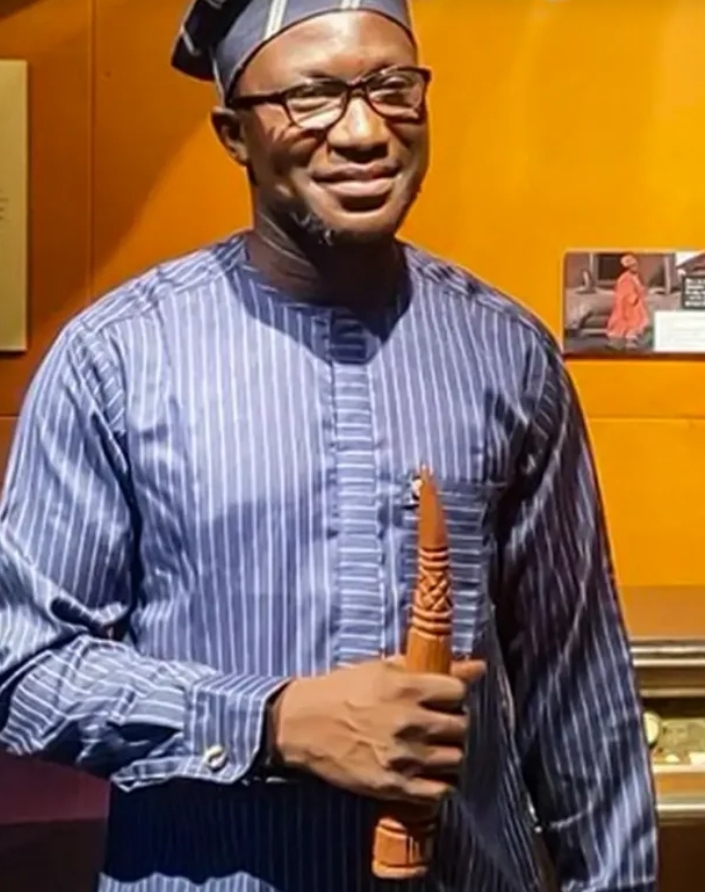
Award-winning filmmaker Ayankola Ayanwuyi has postponed the Ibadan screening of his highly anticipated documentary, The Throne of Alaafin Oyo, citing serious security concerns following an alleged death threat.
Ayanwuyi, who also serves as Executive Director of the Dundun Centre, disclosed the development via his X (formerly Twitter) handle on Tuesday. He alleged that the Alaafin of Oyo, Oba Akeem Abimbola Owoade I, threatened his life over the production of the film.
“Alaafin himself threatened he would kill me and nothing will happen because I made a film promoting the throne of his forebears,” the filmmaker wrote.
“In this age and time, a Yoruba king said he would kill me and nothing will happen.”
The documentary screening, initially scheduled for April 16 in Ibadan, has now been postponed indefinitely.
Before the controversy, Ayanwuyi had formally notified the Alaafin’s palace about the project, stressing its cultural and historical significance.
According to him, the 45-minute documentary chronicles the transition from the reign of Oba Lamidi Adeyemi III to the ascension of the current monarch. It also explores the traditional rites, succession processes, and ancestral lineage central to the revered Oyo institution.
Despite the setback, the film has already generated interest within cultural and academic circles. A private screening held last Saturday at the J. Randle Centre for Yoruba Culture and History drew historians, cultural advocates, and Yoruba heritage enthusiasts.
The event featured an interactive session highlighting the symbolic importance of the Alaafin stool—one of the most enduring traditional institutions in Yoruba history, with roots tracing back to Oranmiyan.
The documentary is also dedicated to the late Adebayo Faleti, in recognition of his contributions to the preservation and promotion of Yoruba language and culture.
As of the time of filing this report, there has been no official response from the Alaafin’s palace regarding the allegations.
The incident has sparked broader concerns about artistic freedom, cultural expression, and the safety of creatives engaging with traditional institutions in Nigeria.