

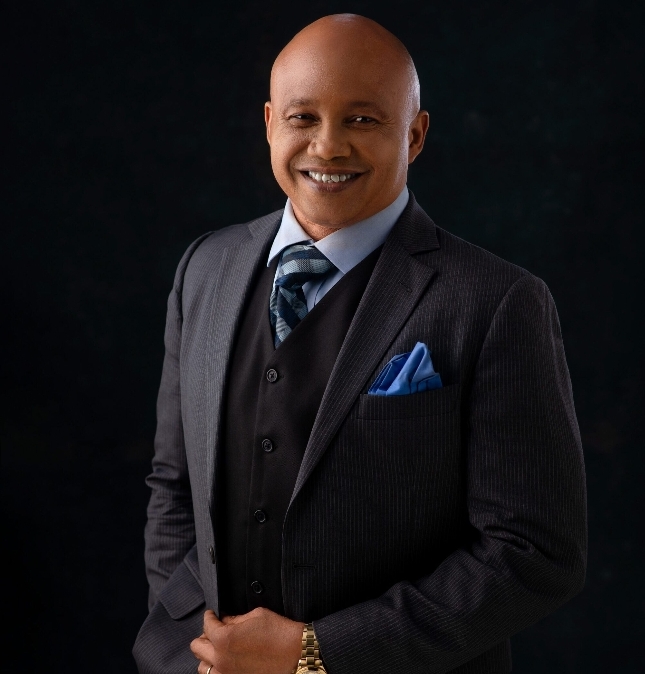
Legendary actor, movie producer, director and philanthropist Paul Agbonze Obazele is one of the accomplished figures in Nigeria’s entertainment industry, with a career spanning television, home-video productions and filmmaking.
A multiple award-winning entertainer, Obazele contested the governorship of his home state, Edo, in the 2024 election under the platform of the African Democratic Congress (ADC). He had earlier sought the governorship ticket of the Labour Party but did not secure the party’s nomination before joining the ADC race.
Known for his versatility and as one of the familiar faces that dominated Nigerian television screens from the 1990s, as well as the home-video industry for over two decades, Obazele was not merely a prominent Nollywood figure but also an influential contributor to the industry’s growth and development.
Having started his career as a model before venturing into acting and movie production, he rose through the ranks to become a two-time president of the Association of Movie Producers (AMP), earning respect among colleagues for his contributions to the industry.
His decision to contest for governor marked a new chapter in his career as he sought to translate his experience, ideas and passion for public service into political leadership. He promised to address what he described as the unsatisfactory state of affairs in Edo State.
In declaring his ambition, Obazele said his decision was motivated by the need to improve the lives of ordinary Edo residents, whom he believed deserved better governance and a greater voice in decisions affecting their welfare.
“I want to seriously impact on my people, change the sad narrative of what is happening to the common people in Edo, where they are neglected, and treated with disdain; where they do not have a say to what concerns their lives or benefit from the dividends of good governance,” he said in an interview published in September 2023.
His proposed agenda included infrastructure development, healthcare reform, improved education, job creation, entertainment and youth empowerment.
For a man whose professional journey has taken him through different aspects of Nigeria’s entertainment industry, the political ambition represented a new chapter in a career that began long before Nollywood became the global phenomenon it is today.
From modelling to the big screen
Born in Lagos State to parents of Edo and Delta State backgrounds, Obazele hails from Esan in Edo State. He is the fifth child in his family and attended Anglican Grammar School, Ubulu-Uku, in present-day Delta State, before proceeding to Auchi Polytechnic, where he studied Business Administration.
It was during his time at the institution that his passion for acting and movie-making became more pronounced, although his ambition initially met resistance from his father, who reportedly preferred that he pursue a more conventional career.
Rather than abandon his interest in entertainment completely, Obazele took up a job at SJ Production Company after graduation. Initially assigned to the accounts section, he was later moved to the production department after his abilities became apparent.
His background in modelling and television commercials also helped open doors for him in the entertainment industry. He was among the recognisable faces in Nigerian advertising at the time, appearing in numerous commercials and promotional campaigns.
He subsequently ventured into mainstream acting and production, eventually establishing himself as a familiar face on television and in home-video productions.
By the 1990s, Nigerian television drama was enjoying a remarkable period, with locally produced soap operas attracting large audiences. Obazele became part of that era, featuring in several productions that remain memorable to viewers who grew up watching Nigerian television.
A familiar face in television drama
For many Nigerians, Obazele’s place in the entertainment industry was established through his appearances in popular television productions, including Checkmate, produced by the late Amaka Igwe, and Ripples, associated with veteran filmmaker Zeb Ejiro.
He also featured in Third Eye and After the Storm, two television productions that helped define an era of Nigerian drama.
His appearances across these programmes demonstrated his versatility and ability to interpret different characters convincingly. From dramatic roles to more authoritative characters, Obazele developed a screen presence that helped him maintain a steady career through changing trends in the industry.
As Nigeria’s entertainment landscape evolved, he successfully moved into home-video productions, building an extensive filmography as an actor and later as a director.
Among the films associated with his career are Shadow of Death, Black Maria, I Need a Husband, Ashanti and Wanted Alive. He also appeared in Political Control and Power Must Change Hands, working alongside other established performers.
His film credits further include Iyore, Invasion 1897 and The Legend of Inikpi, productions that brought aspects of Nigerian history, culture and tradition to the screen.
In Iyore, he portrayed Oba Izuwe, while his involvement in historical productions such as Invasion 1897 demonstrated his continuing interest in stories that explore the history and cultural heritage of the Benin Kingdom and its people.
His Edo roots have also provided a natural connection to productions centred on the traditions and historical experiences of the region.
Unlike performers whose popularity depends largely on constant public visibility, Obazele has built a career through consistency, versatility and a willingness to work across different aspects of film production.
A 2016 profile published by The Guardian reported that he had acted in numerous films and highlighted his contributions to television drama, movie production and the development of Nollywood.
Beyond acting: A commitment to Nollywood
Obazele’s contribution to the entertainment industry extends beyond his performances on screen.
His leadership roles in the Association of Movie Producers, where he served two terms as president, placed him among practitioners involved in the organisation and development of the Nigerian film industry.
He also founded the Legends of Nollywood Awards (LNA), an initiative established to recognise and celebrate veterans and pioneers whose contributions helped lay the foundation for the industry.
The award scheme reflects his concern that some of the people who helped build Nollywood had not received adequate recognition for their work and sacrifices.
Speaking about the initiative, Obazele explained that the loss of several industry veterans had made him realise the importance of celebrating their contributions while they were still alive.
He also expressed a desire to establish a sustainable support system for veteran practitioners, particularly those struggling with basic needs, healthcare and accommodation.
His interest in the welfare of colleagues, alongside his work in movie production and industry administration, has contributed to his public profile as an entertainer with interests extending beyond commercial success.
In 2017, he received the City People Movie Special Recognition Award at the City People Entertainment Awards, another acknowledgement of his standing in the industry.
Taking the Nollywood experience into politics
Obazele’s entry into the Edo governorship race raised questions about how his experience in entertainment and industry administration could translate into public leadership.
While the skills required to produce a film differ from those needed to govern a state, his supporters pointed to his organisational experience, industry connections and involvement in initiatives designed to support other practitioners as relevant aspects of his background.
His stated political priorities also placed emphasis on areas that directly affect ordinary residents, including education, healthcare, infrastructure, employment and youth empowerment.
For Edo State, a state with significant cultural heritage, human resources and economic potential, his proposed emphasis on entertainment and the creative economy was particularly notable.
Obazele argued that the state could do more to harness its cultural assets and create opportunities for young people. His experience in Nollywood, together with his interest in preserving and celebrating Nigerian heritage, could inform his approach to that sector if given the opportunity to serve.
He also expressed the desire to attract investment, improve the business environment and ensure that public resources were used to benefit residents.
However, the governorship race presented a different challenge from the entertainment industry. Beyond personal popularity and professional achievements, aspirants had to convince voters that they possessed the policy understanding, administrative capacity and political support needed to govern effectively.
For Obazele, the immediate task was to present his vision to Edo residents and persuade them that his ambition was driven by more than a desire to exchange the movie set for the corridors of power.
His campaign was therefore judged not only by his record in Nollywood but also by the clarity, feasibility and credibility of the programmes he proposed for the state.
A new chapter for a Nollywood veteran
From his early days in modelling and television commercials to his years as an actor, producer, director and industry administrator, Paul Obazele has experienced several stages of Nigeria’s entertainment industry.
He has witnessed the evolution of television drama, the rise of home-video production and the emergence of Nollywood as an internationally recognised creative force. He has also used his position within the industry to promote the recognition and welfare of its veterans.
His decision to contest the 2024 Edo governorship election under the African Democratic Congress marked a significant step into public life. Although he initially sought the Labour Party ticket, he ultimately pursued his ambition on the ADC platform.
Whether his experience and vision will resonate with Edo voters remains to be seen. What is clear, however, is that Obazele’s political journey represents a significant departure from the career that made him a household name among generations of Nigerian television and movie audiences.
For the veteran actor, the 2024 governorship race offered an opportunity to test whether the recognition earned over decades in entertainment could be converted into the public trust required for political leadership.