
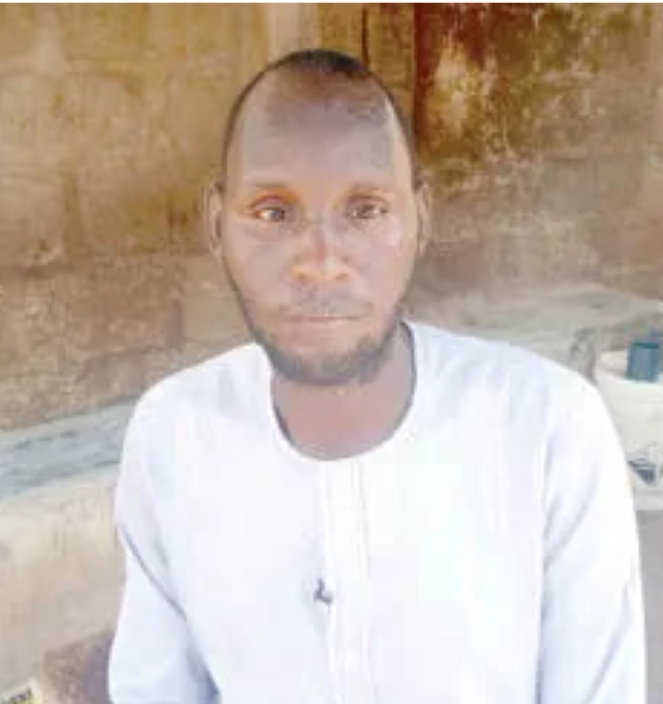
A 30-year-old man, Abdullahi Abubakar, has regained his sight after living with blindness for 27 years, following an eye surgery at a specialist hospital in Kano State.
Abubakar, who was born in Kebbi State and raised in Wudil, Kano State, reportedly lost his sight when he was about three years old, spending most of his childhood and adult life unable to see the world around him.
According to a report by Daily Trust, the operation was performed at Makkah Specialists Eye Hospital in Kano after he was diagnosed with glaucoma and optic neuritis.
The successful procedure has opened a new chapter in his life, allowing him to see his family, explore familiar surroundings and experience things he had previously known only through sound, touch and descriptions from other people.
Abubakar disclosed that he had visited several hospitals and tried different medications in search of a solution to his condition. However, after years of unsuccessful attempts, he eventually gave up hope of regaining his sight.
Despite his blindness, he remained determined to earn a living rather than depend entirely on others. He studied Islamic knowledge, sold water fetched from a river and engaged in livestock trading. He resorted to begging only when other means of survival were unavailable.
His opportunity for treatment came after a neighbour, a police officer, took him to a hospital in Kano for medical examinations.
According to Abubakar, doctors informed him that surgery could help restore his sight, but the procedure was estimated to cost ₦180,000, an amount he could not afford.
Efforts to raise the money from relatives and friends were unsuccessful.
His situation changed when the Wudil Local Government Area announced assistance for people with eye problems. After reviewing his medical reports, officials referred him to Makkah Specialists Eye Hospital, where doctors confirmed that surgery was possible.
Abubakar identified the chairman of Wudil Local Government as the person who paid for the operation.
One of the most emotional moments following the surgery was seeing his daughter’s face for the first time.
Abubakar said he was particularly amazed by the experience because he had never seen her before, despite being her father.
He also used his phone’s camera to look at his own face and discovered the physical resemblance between himself and his daughter, something his wife had previously told him about.
Although seeing his wife was also a remarkable experience, he said seeing his daughter brought him exceptional joy.
The operation initially allowed him to perceive light. His vision began improving after doctors removed the dressing covering his eye the following day.
He explained that doctors told him his sight would gradually improve because he had lived with blindness since childhood.
Regaining his sight has also introduced Abubakar to the visual experiences of everyday life that many people take for granted.
He identified the Wudil River as one of the places that fascinated him most, explaining that he enjoys watching the water, people diving from the bridge and workers using boats to fetch sand.
The sight of stars in the night sky also amazed him. According to him, his wife explained the difference between the moon and the stars when he first observed them.
He also expressed fascination with the movement of animals, including horses and dogs, as well as the busy streets, shops and trading activities around Wudil.
Although he previously depended on friends to guide him, Abubakar said he can now walk independently along familiar routes.
He explained that he carefully memorises routes when visiting unfamiliar places with someone before attempting to navigate them alone.
Beyond the joy of seeing his family and surroundings, Abubakar hopes his restored sight will improve his economic independence.
He disclosed that the Wudil Local Government chairman gave him ₦100,000 to help him establish a business.
Abubakar said he intended to return to livestock trading, a business he had previously engaged in before his sight was restored.
He expressed hope that additional financial support would help him rebuild his livelihood and take advantage of the opportunities available to him.
He also said he hoped to learn to read and write, explaining that although he could now see letters, he had not yet learnt to recognise them.
Abubakar’s experience highlights the challenges faced by people living with visual impairment and the difference that access to medical care and financial assistance can make in their lives.
After 27 years of blindness, his restored sight has given him an opportunity to see his daughter, explore his surroundings and pursue a more independent future.