
President Bola Ahmed Tinubu has rejected calls for the suspension of Nigeria’s newly enacted tax laws, affirming that their implementation will proceed as scheduled from January 1, 2026.
The tax reforms have sparked intense national debate, particularly over allegations that the versions of the laws gazetted differ from those passed by the National Assembly. Groups including the Nigerian Bar Association (NBA), Nigeria Labour Congress (NLC), the minority caucus of the House of Representatives, the Association of National Accountants of Nigeria (ANAN) and the National Association of Nigerian Students (NANS) have urged the federal government to halt implementation pending clarification.
The controversy was triggered by claims from a member of the House of Representatives, Abdussamad Dasuki, that discrepancies exist between the bills approved by lawmakers and the gazetted copies.
The four laws in question are the National Revenue Service (Establishment) Act, Joint Revenue Board of Nigeria (Establishment) Act, Nigeria Tax Administration Act, and the Nigeria Tax Act. They were passed by the National Assembly in March, with Votes and Proceedings issued in May, signed into law by President Tinubu in June and gazetted on June 26.
In response to the allegations, Speaker of the House of Representatives, Abbas Tajudeen, constituted a seven-member ad hoc committee to investigate the matter and report within one week. That deadline elapsed last Thursday, but the report has yet to be made public.
Last Friday, the National Assembly ordered a re-gazetting of the tax laws, a move that has drawn criticism from some legal experts who argue that such action may be unlawful.
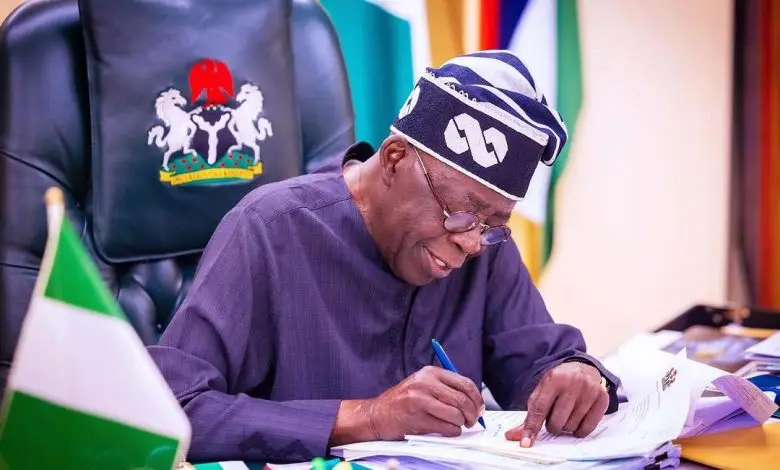
Despite the growing pressure, President Tinubu, in a statement he personally signed on Sunday, reiterated that the tax laws already in effect since June 26, 2025, as well as those scheduled to commence on January 1, 2026, would continue as planned.
He described the reforms as “a once-in-a-generation opportunity” to build a fair, competitive and resilient fiscal foundation for Nigeria. According to the president, the laws are not intended to raise taxes but to reset the system structurally, harmonise tax administration and strengthen the social contract.
Tinubu acknowledged public concerns over alleged alterations to the laws but maintained that no substantial issue has been established to justify halting the reform process.
“No substantial issue has been established that warrants a disruption of the reform process. Absolute trust is built over time through making the right decisions, not through premature, reactive measures,” he said.
The president reaffirmed his administration’s commitment to due process and legislative integrity, assuring Nigerians that the Presidency would work closely with the National Assembly to resolve any identified issues swiftly.
He added that the federal government would continue to act in the overriding public interest to deliver a tax system that promotes prosperity and shared responsibility.